Should You Have a Support Crew at Your Ultra?

Mark Green
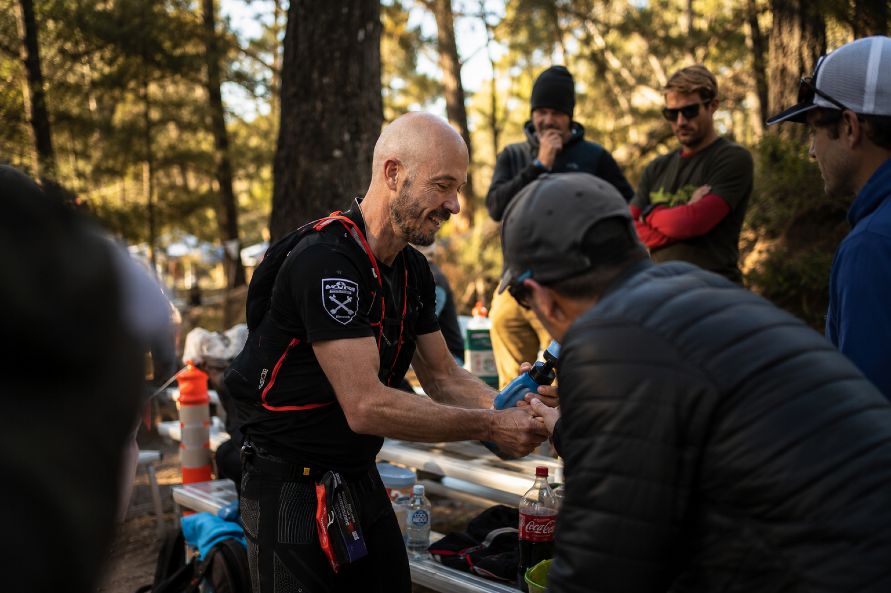
I’ve been having a lot of conversations in the physio clinic lately about whether ultra runners should have a support crew.
Some runners genuinely prefer to go it alone. For them, self-sufficiency is part of the challenge, and that’s completely understandable.
But based on my own experience, and that of most of the runners I speak to, the majority of runners benefit enormously from having a crew.
Of course, having a crew isn’t always practical. It can be expensive, logistically difficult, and a big ask of family and friends. But if you do have someone willing to help, setting them up well can make a huge difference.
You can’t expect your support crew to automatically know what to do. There’s a lot for them to learn, so I’d suggest writing them a proper set of instructions, giving them a copy of your race plan, and going through it together before race day.
Before the race, make sure you talk to them about these two things.
Tell them not to offer you the option of pulling out just because you look a bit rough. You will look rough. That’s normal.
Make sure they understand that at two in the morning you probably won’t be making great decisions. They need to step up and help. That means asking specific, direct questions rather than open-ended ones. Not “How are you feeling?” but “Have you had a drink in the last twenty minutes? Do you want Coke or water?”
I’ve seen incredibly experienced runners who can barely string a sentence together at three in the morning. Fatigue changes people. That’s exactly when a good crew becomes invaluable.
If you get that right and your crew has a good understanding of what to expect on race day, these are some of the benefits they can bring.
Speed up your checkpoint time
This is probably the biggest practical gain.
A crew who knows your plan can have everything ready before you arrive — food out, bottles filled, kit laid out. Instead of spending ten minutes rummaging through a drop bag with shaking hands, you’re in and out in two.
Over a long race, that adds up to a lot of time.
Take over decision making when yours has gone
Decision fatigue is real.
Later in a race your ability to think clearly deteriorates significantly. A crew who knows your plan can make calls for you — what to eat, what to wear, how long to stay — without you needing to figure it out yourself.
Have the right gear ready for the right section
Headtorch charged and ready before a night section.
Rain jacket out if the weather is turning.
Dry socks at the checkpoint where you know your feet will be suffering.
This stuff seems obvious during planning and becomes surprisingly hard to manage on your own mid-race.
Provide food options the race doesn’t
Aid station food is what it is.
A lot of runners go off certain foods mid-race and need alternatives. A crew can bring whatever works for you — real food, your preferred gels, something warm at night, or just the specific thing you’ve been craving for the last three hours.
Fix the little problems before they become big ones
Taping a blister.
Applying more anti-chafe.
Checking a hot spot before it becomes a serious problem.
These things are slow and fiddly to do yourself when you’re exhausted. A crew member who knows what to look for can deal with them quickly and get you moving again.
Give you a friendly face in the middle of the night
This sounds soft, but it genuinely isn’t.
Seeing someone you know at 3am who is happy to see you, calm and smiling, can shift your mood considerably.
It’s a small thing that makes a real difference.
Track what you’ve taken so you don’t have to
Your crew can monitor what you’ve eaten, what’s left in the bag, and what you’ll need for the next section.
That’s mental load you don’t have to carry at a point in the race when your brain has better things to do.
Update people so you don’t have to stop
Family and friends want to know how you’re going.
A crew can handle all of that communication so you’re not fumbling with your phone at checkpoints trying to reassure people while the clock ticks.
Manage your rest properly in a multi-day event
For longer races, a crew can run a planned sleep stop properly — alarm set, food ready, dry kit waiting.
That way your downtime is actually useful recovery rather than disorganised chaos where you lose more time than you needed to.
Be there at the finish
Having someone at the line who can take your pack, get you warm, find you food and drive you home is more valuable than it sounds.
Finishing alone sounds fine when you’re sitting on the couch planning your race. It feels very different when you’ve been awake for 30 hours, your feet hurt, and you’re trying to find your car while wrapped in a foil blanket.
One final thought: back-of-pack runners often need a crew more than anyone else.
I’ve had runners tell me they don’t feel worthy of asking for help because they aren’t chasing podiums. I’d argue the opposite.
If you’re pushing close to cut-offs, a crew who can get you in and out of checkpoints quickly, keep you fuelled and help you make good decisions could be the difference between finishing and not.
The runners at the front can usually afford to lose a few minutes here and there.
The runners at the back often can’t.
So if someone has offered to crew for you, don’t think of it as cheating or taking advantage.
Think of it as part of your race plan.