Race Report – UTK100 2026 – Shane Bukovinsky

Mark Green
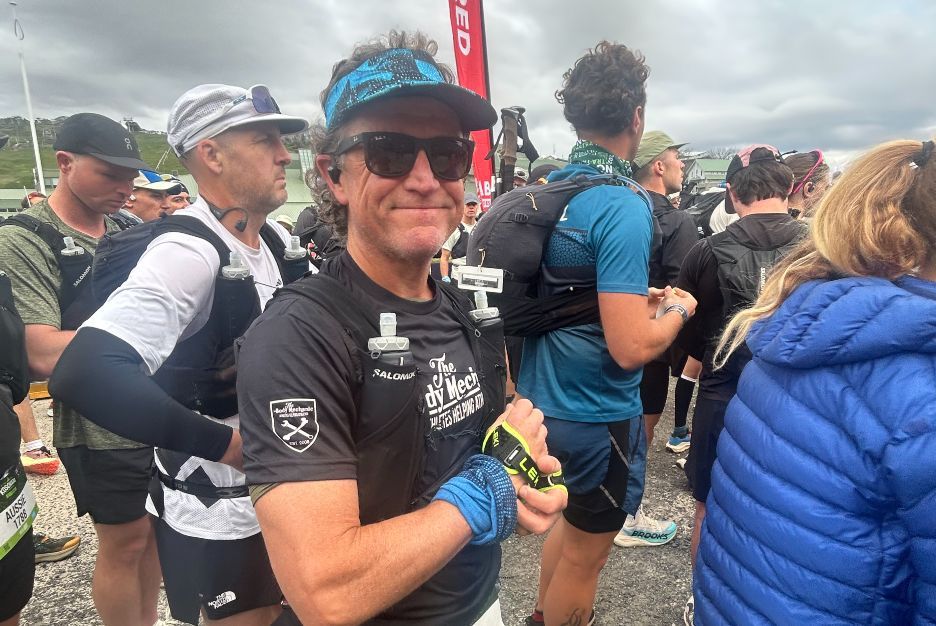
A PB and an age group win, with one working arm
Result: UTK100 in 15:53:25, a 7-minute PB, 148th of 931 overall, 1st of 17 in the male 60-64 age group
This year’s UTK was a different experience for me, both the build-up and the day itself.
The final training block went well. The preparation peaked with the Bright Alpine Challenge (4 Peaks), which was my biggest training week of the build. Late in that week, after some recovery, I had a strange calf cramp during a small fall on a trail run. It left me with a sharp nerve pain under my calf that at times became intense on my easy runs. This angry calf created some concern about race day, and managing the pain became my main focus in order to achieve the result I was chasing.
A hot start
When race day arrived I was surprised how warm it was. I was drinking well above my usual 500ml per hour during the first two hours and struggled to quench my thirst. My heart rate was running higher than normal, which I allowed until the first aid station at Charlotte Pass. After that I started walking whenever it peaked above my target. By this point the calf was minor and not affecting me. The thing I had worried about all week turned out to be the least of my problems.
I started the day in a t-shirt with a base layer and finished in the same gear. There were no shoe or sock changes this year, I used no cold weather gear, and I woke the next day with some sunburn. It was nice to have a dry run on these trails, since four seasons in a day is not unusual in the high country.
It was a long, hot run up to Kosci and across the Main Range, where I once again ran out of water and was feeling it when I came back into Charlotte Pass. I chose to cruise from this aid station through Guthega and on to Perisher. I enjoyed this section and felt on pace for my goal, but I was quickly growing tired of sweet gels and chews as my fuel source.
At Perisher my legendary pit crew, my partner Amanda, was set up with all the savoury food I had asked for, but I simply could not get much of it down. A few small bites each of noodles, potatoes and a peanut butter sandwich was all I could stomach. My appetite was fading and my mouth was dry.
The fall
I had fond memories of the next leg to Bullocks Flat, a twisting, scenic descent that is not too harsh on the legs. It was good until the very bottom, where I misjudged some steps around a tree, fell forward down the steps and could not break my fall with my arms. I landed heavily on my left shoulder and felt some cracking as I tried to move. I just lay there until the next runner came through and helped me roll over and get up, since I could not use my left arm. I could not raise it above my hip, wipe the sweat from my eye or twist it to read my Garmin. My stomach sank.
I was less than 2km from the Bullocks Flat aid station and found I could still run with my arms by my side in my usual style. As I continued I noticed pain in one of my knees and my hip from the fall as well. I was starting to think the goal was slipping away and was glad the aid station was close so I could take stock.
At the aid station I took some pain relief, had a good coffee, tried more savoury food without much success and stocked up on water for the long slog to Thredbo. After 13 minutes there it was very hard to get rolling again. I did have second thoughts about continuing through the pain, but the thought of sitting in my hotel room a few hours later wondering ‘what could have been’ seemed much more painful. In the end it was an easy choice to continue and see how it played out.
One arm to Thredbo
Although I could not lift my left arm above my hip, I could still use my poles, and they helped with rhythm and drive on the undulating run up the valley. They were much harder to use on the final climb, where I was often in a rut and needed to place the poles higher than my hip. That forced me to plant the left pole behind me and push.
Another small challenge was my Garmin battery dying not far out of Bullocks Flat. It is six years old, so maybe it is time to upgrade. That meant I lost my music and any way to keep track of the timing of my fuelling. I turned on my phone, started a Strava activity to record the run and put my music back on.
When I came into Thredbo, Amanda told me the race time predictor still had me 15 minutes ahead of my PB and around 10 minutes ahead of second in my age group. I was shocked and encouraged. I was behind my fuel plan of 90g of carbs per hour from gels and chews, so I tried to push down more savoury carbs. Again I struggled to eat much, so I drank more Tailwind to compensate.
The final climb
I was hoping the course changes on the mountain would make it more enjoyable, and that just set me up for disappointment. Once we were on the serious climb of uneven steps it seemed relentless, especially without proper use of my left pole.
I was relieved to reach the final aid station, fuelled up on Coca-Cola and expected to descend straight away on a wide-open fire trail. I should have looked more closely at the route map, because there was still more climbing to do in the dark, then a rocky traverse of 2-3km before the descent began.
When the descent finally started it really tested my knees and quads. I was pleased to be moving faster than others and picked up some places on the way down. This year’s new descent is much more runnable and enjoyable, at least for old guys like me with 100km in the legs.
The finish
It was a great sight to see the finish line and hear Amanda’s voice as I crossed it. I finished in 15:53:25, and I was absolutely delighted to take 7 minutes off my UTK PB and win my age group. Both were made more satisfying by the challenges I had to deal with on the day.
X-rays have ruled out a break, but it looks like I have a torn rotator cuff.
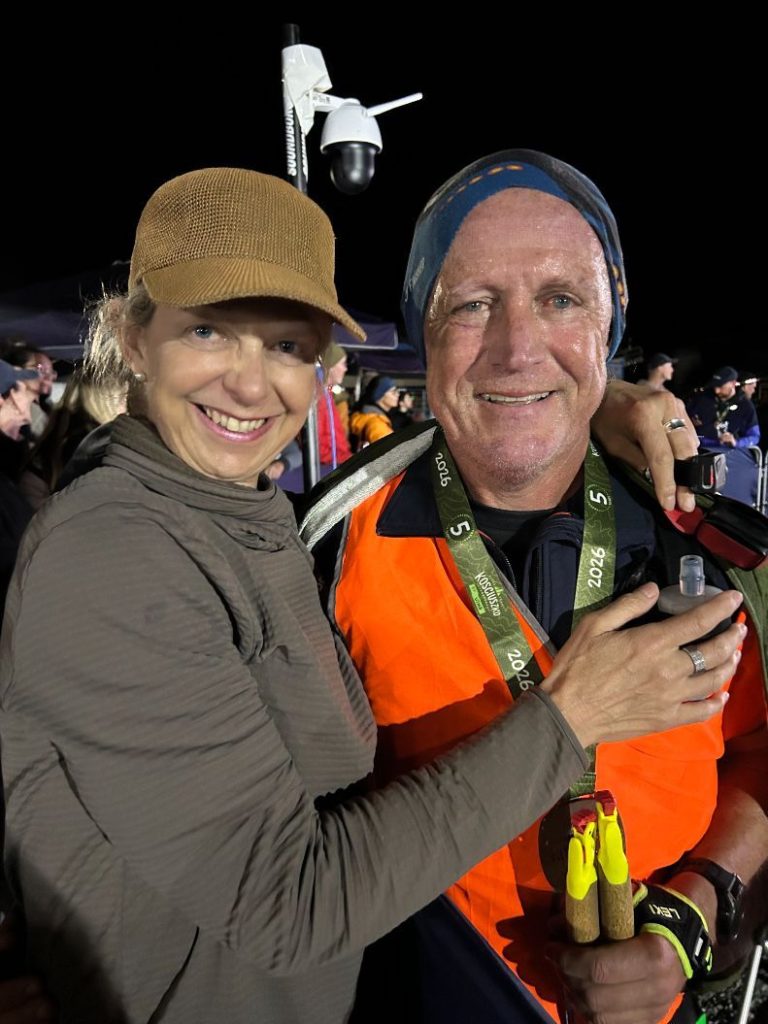
Many thanks to Amanda Collins for her full support in chasing these goals and for sharing these adventures with me, and to Mark Green for his training and guidance through 2026.
Congratulations to the organisers on another successful event, and thanks to the many volunteers who make it possible.